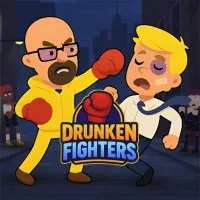
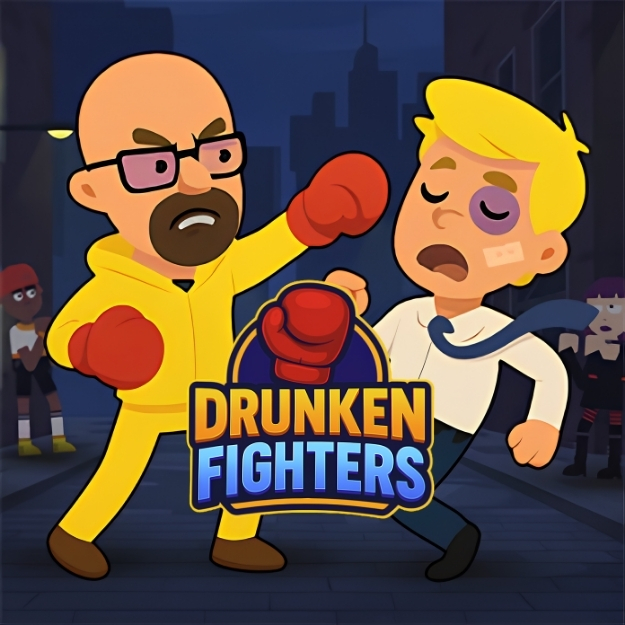
Drunken Fighters puts two ragdoll boxers in a ring and immediately removes the most comforting fighting game promise: that clean inputs produce clean results. Both fighters wobble. Punches that look well-timed don't always land the way you planned. The chaos hits both sides equally, which means the skill isn't about executing better combinations - it's about recovering from the same mess faster than your opponent does.
Both Fighters Are Working With the Same Physics
Every fighting game offers some version of mastery: learn the combos, read the opponent, control the outcome. Drunken Fighters revokes that contract in the first exchange. The ragdoll physics apply to both fighters at the same moment - a punch connects, and both bodies react to the collision. Your fighter staggers from the recoil of the swing while your opponent stumbles from the impact. Neither of you gets a clean reset before the next exchange starts, which means the next hit is attempted from whatever position the last one left you in. Winning here isn't about playing precisely. It's about reading the chaos a half-second faster.
How a Match Works
Drunken Fighters uses a three-round structure: whoever brings the other fighter down enough times wins the round, and the match goes to whoever takes two of three. You can play solo against AI opponents or share the keyboard with another player for local two-player bouts. Rounds are short - the ragdoll physics make fights decisive rather than drawn-out endurance contests. Funny Mods shift how the physics behave between matches, introducing modifiers that create entirely different match dynamics. Random Mode remixes the variables without warning. Between bouts, coins earned in the ring unlock a roster of cartoon-style fighters through the shop.
Controls
Player 1:
A - block
S - kick
D - punch
Player 2:
Right Arrow - block
Down Arrow - kick
Left Arrow - punch
Why Recovery Beats Aggression
The game's own tips make this point directly: recover first, attack second. In Drunken Fighters, the player who chases the follow-up punch immediately after being hit is almost always still off-balance from the previous exchange. That second swing connects wrong, and now both fighters are staggering through overlapping wobbles with neither in control. The player who waits - who lets the ragdoll physics reach something approaching stability before committing to the next move - consistently lands cleaner hits and produces more useful chaos for the opponent. Patience in a chaos game is the unexpected skill gap.
Why Two Players Changes Everything
Drunken Fighters is worth playing solo, but it becomes something different when there's another person on the same keyboard. The AI opponent reacts consistently; a human opponent improvises, overcommits, and tilts, which the ragdoll physics punish in ways that feel genuinely earned rather than scripted. Funny Mods amplify this further - a modifier that changes how knockdowns behave suddenly requires both players to rebuild how they approach each exchange at the same time. When the chaos is shared and neither player knows exactly what the next modifier does, every round becomes its own unpredictable set of physics negotiations.
The chaos keeps going inCity Brawl andJujutsu Battleground - both bring that same unpredictable energy to a different kind of ring. The physics will still find a way to make you look ridiculous. Pick your next fight and see who recovers fastest.