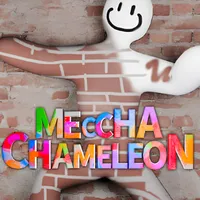
Meccha Chameleon is a multiplayer hide-and-seek game where props transform into objects and hunters try to find them before time runs out. Most players start by picking a color that matches the nearest floor or wall. The players who consistently survive aren't matching a single color - they're building a disguise that holds up from every angle a hunter might walk in from.
Camouflage Is an Engineering Problem
The mistake new props make is thinking about hiding. Experienced players think about visibility. There's a difference: hiding puts you somewhere out of the way; visibility management considers how suspicious your shape looks from five different entry points in the same room. A perfect color match standing in the middle of an open wall is weaker than an imperfect match tucked behind overlapping furniture. A spot that looks convincing straight-on falls apart the moment a hunter approaches from the side. Before you transform, you're not choosing where to hide - you're choosing where your disguise is least likely to fail.
How Rounds Work on Both Sides
Each match assigns players to either the prop team or the hunter team. Props get a short window at the start to transform into a nearby object, position themselves, and settle convincingly into the environment. Thirty seconds later, taunt sounds begin playing automatically from each prop's location - a mechanic that forces props to maintain strong positions rather than relying on initial placement indefinitely. Hunters sweep the map armed with weapons, shooting anything that looks out of place. A clean kill scores the round for hunters; props who survive until the timer ends win for their side. 5v5 matches run fast enough that both roles see multiple rounds per session.
Controls
All players:
WASD / Arrow Keys - move
Spacebar - jump
L - toggle mouse lock
Tab - open menu
Enter - open chat
Hunters:
Left Mouse Button - shoot
R - reload
1, 2, 3 - switch weapons
Props:
E - transform into / interact with object
Q - taunt
Right Mouse Button - rotate object
Mouse Wheel - zoom
What a Convincing Disguise Actually Requires
Color is the first layer. Brightness and shadow matching are the second - a prop that copies the right hue but sits in a differently lit area of the room draws attention from experienced hunters who have stopped looking at color and started looking at light. Silhouette and scale are the third layer and the most commonly missed: a prop that stands slightly taller than the surrounding objects, or occupies a space where nothing that size normally exists, will be found despite a technically accurate color match. Meccha Chameleon rewards players who study what belongs in a space before they decide to become part of it.
Playing Hunter: Forcing the Mistake
Experienced hunters don't just search - they bait. A prop that survived purely on visual quality will often react to a nearby footstep or weapon draw: a slight rotation, a taunt triggered too early, a position shift that reveals movement where objects don't move. Stun abilities create pressure moments specifically designed to prompt these micro-reactions. The game rewards hunters who apply pressure to suspicious locations as much as it rewards props who resist reacting to that pressure. Both roles require the same underlying skill - predicting what the other side will do next.
Among Us runs the same kind of social deduction from a very different format, andRobber Run puts you on the other side of the chase in something much faster and more physical.