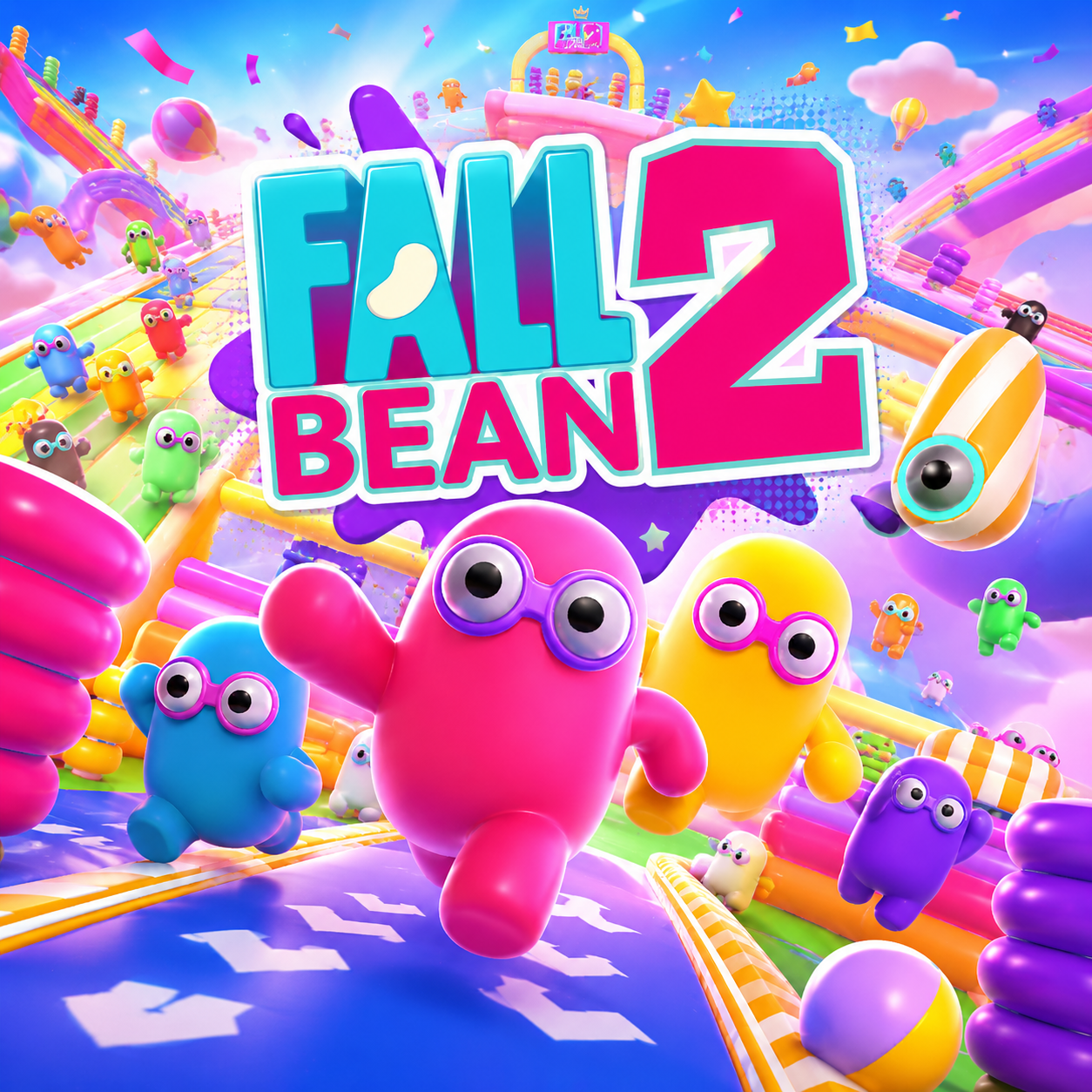
Fall Bean 2 puts you inside a chaotic obstacle race where the hazards compound the longer a round goes on. Spinning hammers arc across the path with wide, unforgiving sweeps. Platforms drop the moment you commit to them. Rolling obstacles appear in the gaps you just decided were safe. Each one that beats you teaches you something specific about how it moves, and the run that follows is already smarter than the one that just ended.
The Course Teaches as It Destroys
Every stage in Fall Bean 2 is a lesson disguised as a problem. The first time a spinning hammer catches you mid-jump, you know almost nothing - just that the arc is wider than it looked. The second time, you know when the swing begins. By the third attempt at a tough section, the obstacle that felt random has started to feel like a puzzle with a consistent answer. The collapsing floor segment that ended your run halfway through is already less intimidating the next time you reach it - because now you know where the real edge is, and what approach keeps you on it. The game never explains this directly. It demonstrates it through failure, and the demonstration is always accurate.
What a Round Looks Like
Fall Bean 2 builds its obstacle races to escalate as they go. Each round opens deceptively simply - a forward path with a small number of hazards and room to find your footing - then gradually stacks the complexity. Platforms start moving in patterns that only become readable once you've seen them cycle twice. Rolling obstacles begin filling in the spaces that looked clear a moment before. Spinning mechanisms appear across routes that were open when you started the run. Your goal is to navigate each stage and reach the finish. Some stages trim the field early with traps that catch the impatient; others draw the challenge out to the final stretch, where every remaining player is working with the same tested patience and the same shrinking margin.
Controls
WASD or Arrow Keys - move and run
Spacebar - jump
Why the Failures Are the Whole Point
What makes Fall Bean 2 work is that failure carries good information. When the spinning hammer clips you, it's because you timed the approach wrong - and you immediately understand what "wrong" meant, because the timing is the same every cycle. When the platform drops the moment you land on it, you learn that arriving a fraction of a second earlier changes the result entirely. The game doesn't slow down or offer explanations. It also doesn't randomize on you. Every obstacle follows its pattern precisely, which means every failure has a specific cause and a specific correction. That consistency is what turns a game that looks like pure chaos into something that genuinely rewards attention over time.
The Stages Expand What You Know
Fall Bean 2 doesn't make things harder by speeding everything up. It adds variables to the same physical space. A stage that introduced one spinning hammer earlier now runs two of them out of phase with each other, which means the gap you used last time closes before you reach it. The arenas are built with this kind of layered logic - each new element assumes you've already absorbed the previous one, and the combination is where the difficulty actually lives. By the time a later stage runs four different obstacle types through the same corridor, the challenge feels proportional rather than overwhelming. The game has been building you toward it one piece at a time.
The stages don't stop layering variables once you've got the timing right - they just add more moving parts to the mix. Monkey Bomb Tag - Obby Online and Challenge Rush bring the same obstacle-reading energy from completely different directions, with enough new wrinkles to keep the learning loop running.