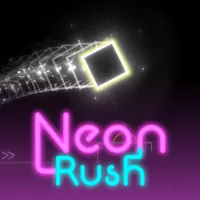
Every hidden item in Neon Rush adds an instrument to the level's music. Speed straight to the exit and the soundtrack plays incomplete - a drum loop without the melody, a bass line without the chords. Find everything along the way and it builds into a full arrangement by the time you reach the finish. The game is composing something. You decide how much of it gets heard.
The Soundtrack Is a Map of What You Missed
Neon Rush is a rhythm-inspired 2D platformer with two things to optimize at once: time and thoroughness. A fast run gets you to the exit quickly. A thorough run builds the music one instrument at a time. Speedrunners and completionists are technically running the same levels, but they finish them hearing entirely different versions.
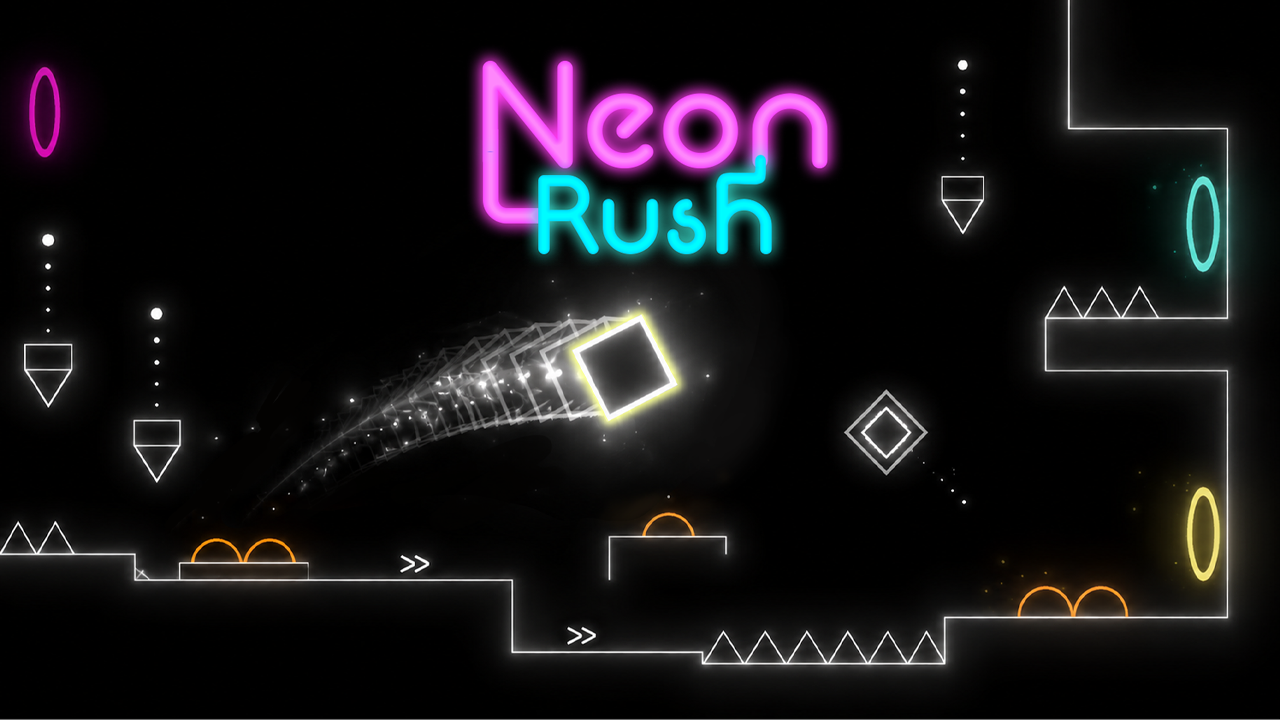
The neon visual language is consistent and readable - spikes glow with a sharp silhouette, bounce pads carry a visible arc indicator, speed pads leave a motion streak, and rotating hazards telegraph their sweep. The design isn't trying to hide what's coming. It's presenting hazards fast enough that reading a section one step ahead becomes the actual skill.
How to Play Neon Rush
Each stage runs from a start point to an exit through a designed sequence of obstacles and interactive platforms. Your job is simple: reach the exit without contacting any hazard. Bounce pads throw you across gaps that can't be jumped on their own - their trajectory is consistent enough to predict and plan around. Speed pads accelerate immediately on contact, which requires knowing what's directly ahead before you hit one. Moving platforms demand timing over raw movement speed.
The hidden collectibles sit off the fastest path - sometimes a short detour, sometimes a precision jump onto an optional platform sequence. Neon Rush doesn't mark their locations, which means a second run becomes a re-read of a level you thought you already understood. Completionist runs reveal a different version of each stage than speed runs do.
Controls
A / Left Arrow - move left
D / Right Arrow - move right
Space / W / Up Arrow - jump
R - restart the current level instantly
Following the Beat Is a Gameplay Tip, Not Just Aesthetic
ZapGames notes that many of the jumps in Neon Rush align with the level's background music, and playing in rhythm genuinely improves timing on harder sections. That's not incidental - the music functions as a timing reference, the same way a metronome does. Players who struggle with a specific platform sequence often find that listening to the beat rather than watching the obstacle is what unlocks their timing.
The incomplete soundtrack carries that logic further. Missing instruments aren't just a cosmetic gap - they're a direct audio signal telling you that parts of the level exist that you haven't visited yet.
The Difficulty That Teaches Before It Tests
Neon Rush introduces hazard types in sequence before combining them. Spikes appear alone before moving platforms do. Moving platforms appear before rotating hazards layer in. Speed pads show up in safe contexts before they show up near gaps. Each new challenge extends a mechanic you've already practiced, rather than introducing something entirely new.
That structure means failed attempts carry information rather than just frustration. Neon Rush doesn't change between runs - the layout is fixed - so every attempt gives you a more accurate internal map of exactly where your timing broke down. The instant restart (R key) keeps the loop tight: failure to running again happens fast enough that momentum stays.
No download needed - pick a level and find out what the full soundtrack sounds like. Geometry Dash runs on the same timing-and-precision formula with a sharper single-tap format, and Arcade Glide brings a different speed-through-obstacles run worth trying once this one has you.