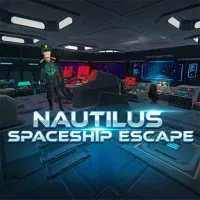
Nautilus Spaceship Escape starts with a power outage and no explanation. You're on a spaceship, the lights are wrong, and whatever happened while you were asleep isn't something the ship will tell you directly. Every answer in this game has to be found - and most of them are hiding in plain sight.
Why the Silence Is the Actual Puzzle
Most escape games give you a clear problem and a time limit. Nautilus Spaceship Escape gives you a quiet ship and no instructions. The atmosphere does the work that text boxes don't: something is wrong here, and the absence of crew, the dim lighting, and the locked compartments are all clues in themselves. The game is built for players who slow down rather than click fast - who examine a room before interacting with anything, and who treat each new section of the ship as a space to be understood before it's solved.
How to Navigate the Nautilus
Progress comes from observation and combination. You click to interact with objects scattered across the ship's compartments - some are items you collect, others are panels you examine, and a few are locks that only respond to the right item. The game moves at your pace, which means it rewards players who build a mental map of the ship and track what's already been tried. Clues don't announce themselves. The relevance of an object often only becomes clear once you've found something else - so revisiting areas after collecting new items is part of the process rather than a sign that you're lost.
Controls
Mouse - interact with objects and environment
Left Click - collect items and examine panels
Inventory - combine collected items to unlock new areas and progress
How the Compartment Structure Creates Tension
The Nautilus is divided into sections, each locked or blocked until you've resolved the previous section's requirements. That gating creates tension not through timers but through the slow accumulation of knowledge. You can often see the next door you can't open yet - which makes finding the piece that opens it feel genuinely satisfying rather than arbitrary. Nautilus Spaceship Escape uses that structure deliberately: every puzzle you solve confirms you're reading the ship's logic correctly, not just guessing.
The Story the Environment Tells
What happened to the crew, why the power went down, and what the Nautilus was doing in this region of space are questions the game answers through objects and panels rather than dialogue. Players who enjoy assembling a narrative from environmental details rather than cutscenes will find the payoff stronger for having built it themselves. The ending lands differently when you've pieced together the full picture on your own terms - which is exactly what the game is designed to let you do.
If you like games that trust you to think,Undertale Yellow andRiddle School offer the same slow-burn satisfaction from different settings.