The card hand dealt to you at the start of each level in Golf Puzzle is not a set of options - it's a specific answer waiting to be decoded. Each hole has exactly one valid sequence hidden in that hand. The satisfaction isn't in finding a creative path. It's in recognizing the one correct path the designer placed there, and understanding why every other order fails.
Why Each Hand Is Already a Solution
Every other card-based puzzle game gives you freedom to experiment with different sequences and reach the goal multiple ways. Golf Puzzle works differently. The limited card count and specific terrain geometry mean the cards you receive aren't tools you choose how to use - they're clues to a predetermined solution. A wasted card doesn't just slow you down; it makes the hole mathematically unsolvable. This is closer to a logic puzzle than a strategy game, and players who approach it that way start solving levels on the first try rather than the third.
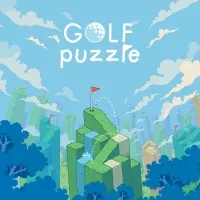
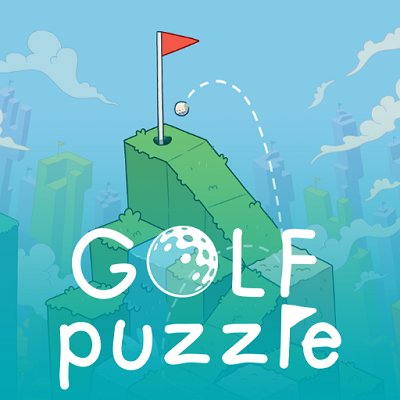
This design choice is also what makes the misty mountain aesthetic more than decoration. Each level sits on a vertical course that ascends like a real climb. Solving a hole isn't just clearing a puzzle - it's literally moving upward. The spatial metaphor is built into the structure, which is why Golf Puzzle feels distinctly different from abstract grid puzzlers even though the core mechanic is simple.
How the Card System Works
In Golf Puzzle, you receive a small hand of movement cards at the start of each level. Each card specifies a distance and a behavior - some send the ball a fixed number of tiles, others interact with hazards like slopes, sand, and water in specific ways. You select a card, aim in a direction, and release to move the ball. The goal is to land in the hole using exactly the cards provided.
As levels progress, the terrain introduces elements that change how card effects resolve. A slope tile extends a card's distance without consuming an additional card. Sand tiles absorb movement. Water hazards return the ball to its previous position if landed on. Understanding how each card type interacts with each terrain modifier is the full rule set of the game - there are 120+ handcrafted levels built on those interactions.
Controls
Mouse Click - select a movement card from your hand
Mouse Drag / Aim - choose the direction of the shot
Release Click - launch the ball in the chosen direction
Reading Terrain Before You Play a Card
ZapGames and 1Games both give the same tip: plan backward from the hole before your first move. This is correct but incomplete. The more important habit is reading the terrain modifiers first, because slope and water tiles are multipliers on card distance, not obstacles to avoid. A slope in the right direction means a short-distance card reaches further than its face value suggests. Players who see terrain as the enemy miss that it's actually the hint system.
When a hole feels impossible, the answer is almost always a terrain interaction you haven't used yet. The card you have is correct. The path you're planning isn't using the environment to extend it.
What 120 Levels of Ascending Difficulty Feels Like
Golf Puzzle starts with three or four open tiles and a two-card hand. By the midpoint, levels use every terrain type in combination, and the same card that solved an early level becomes the wrong choice in a new context. The game never introduces new mechanics after the opening levels - it only deepens the combinations between what already exists. This is what keeps the difficulty progression feeling fair rather than arbitrary. You're not learning new rules; you're building fluency with a small, consistent rule set applied to increasingly precise configurations.
Solve your first mountain and keep climbing -Golf Hit takes the sport in a faster, more action-driven direction, andKinda Hard Golf brings its own spin on physics-based challenge.