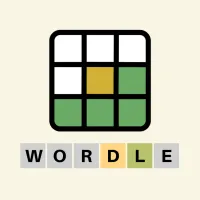
Wordle gives you six attempts to identify a hidden five-letter word, and the only feedback you get is color. Green means right letter, right spot. Yellow means right letter, wrong spot. Gray means the letter isn't in the word at all. What looks like a simple word game turns out to be a logic puzzle where vocabulary is just the entry fee - the real skill is in how efficiently you use each guess.
Your Opening Word Is a Strategic Decision
Every guide eventually tells you to "pick a good starter word." What none of them explain is why it matters mathematically. An ideal opening guess contains five of the most common letters in English five-letter words - typically combinations of E, A, R, O, T, S, I, N. A strong opener can eliminate or confirm multiple high-frequency letters in a single guess, dramatically narrowing the solution space before you've committed to any specific word theory. Players who choose emotionally satisfying openers often waste early guesses on low-information returns, while players who treat the opener as a diagnostic tool solve the puzzle in fewer attempts on average.
How Wordle Works
Each day, a single five-letter English word is selected as the target. You type a five-letter word and submit it. The game responds by coloring each tile: green for correct position, yellow for correct letter in wrong position, gray for letters not present in the answer. You use those results to refine your next guess, eliminating impossible letters and repositioning confirmed ones. The cycle repeats across up to six rows. If you identify all five letters in correct positions before running out of guesses, the entire board turns green, signaling completion. The puzzle resets the following day with a new target word.
Controls
Keyboard - type letters to form your five-letter guess
Enter - submit the current word for evaluation
Backspace - delete the last entered letter before submission
Reading the Colors Is a Skill on Its Own
A yellow tile tells you a letter is somewhere in the word - but not where. Misreading yellows is one of the most common sources of wasted guesses in Wordle. If a letter appears yellow in position two, your next guess should test it in positions one, three, four, or five, not repeat it in position two. Gray tiles eliminate a letter entirely, which is information just as useful as a confirmation - every gray narrows the remaining possibility space. Players who track eliminated letters carefully will rarely need all six guesses. Players who replay confirmed letters in the same wrong position often run out of rows solving what should have been obvious two guesses earlier.
Why the Daily Format Keeps Players Returning
Wordle produces one puzzle per day, and that constraint is a feature rather than a limitation. The single daily challenge creates a shared experience - everyone attempting the same word on the same day - which drives the social sharing behavior that made the game a cultural moment. Streaks add a low-stakes form of personal accountability that encourages returning even on days when you'd otherwise skip. The brevity means the game never overstays its welcome: a Wordle session lasts three to five minutes even when played thoughtfully, which makes fitting it into any routine trivially easy.
No download required -Foodle andNumberle bring the same five-guess deduction logic to food words and numbers if the word format clicked for you.