Fast Food Simulator - The Orders Don't Stop Coming
The first customer is easy. The second is fine. By the fifth, something is burning, the sixth is still waiting for their drink, and you've just realized you started the wrong order for the seventh. This is Fast Food Simulator, and this is Tuesday.
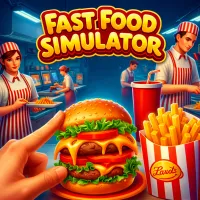
Fast Food Simulator puts you behind the counter of a fast food restaurant in a busy virtual town, responsible for taking orders, preparing food, and getting everything out before customers lose patience. The premise is simple. The execution - once the lunch rush hits and the kitchen has three things cooking simultaneously - is anything but.
The Kitchen Is a Multitasking Puzzle
What makes Fast Food Simulator work as a game is that the challenge isn't in any individual task - taking an order is easy, cooking a burger is easy, delivering a tray is easy. The difficulty is in holding multiple tasks in progress at once without losing track of which station needs attention next.
Experienced players develop a mental queue: start the item with the longest cook time first, handle the quick-prep items while it runs, deliver completed orders on the way back to check the grill. This flow state - where the kitchen runs in parallel rather than sequentially - is what separates fast, profitable shifts from chaotic ones where everything finishes at the wrong time.
Burned food is the most expensive mistake. A burned item costs you both the ingredients and the time it took to cook, which usually means a customer leaves before the replacement is ready. Learning the exact timing for each menu item - not just approximate, but precise - eliminates the majority of burns and keeps the kitchen moving.
Upgrades Change What's Possible
The progression system in Fast Food Simulator directly expands what the kitchen can handle. Better equipment speeds up cooking times and reduces the margin for error on timing-sensitive items. Menu expansions add higher-value orders that bring in more revenue per customer but require more preparation steps. Interior upgrades improve customer satisfaction and increase the number of people willing to wait for a table.
The upgrade priority that produces the best early results: kitchen equipment before menu expansion. A faster grill and better prep stations let you handle the existing menu more efficiently, which generates more revenue per shift than adding new items to a kitchen that already struggles to keep up. Expand the menu once the core workflow is clean and consistent.
How to Play
Use WASD to move around the kitchen and restaurant floor
Move the mouse to look around and orient yourself between stations
Press E to interact with objects, equipment, customers, and order stations
Take each customer's order first before beginning food preparation
Deliver completed orders quickly to maximize tips and customer satisfaction ratings
Two Habits That Separate Smooth Shifts from Chaotic Ones
Start with the slowest item on every order. The moment a customer's order comes in, identify the component with the longest cook time and start it immediately. Everything else in that order can be prepared while it runs. Players who start with quick items and then move to slow ones consistently have gaps in delivery timing that compound across multiple orders.
Watch the door, not just the counter. New customers arriving while you're mid-preparation are easy to miss, and a customer who waits too long without acknowledgment leaves before you get a chance to take their order. Developing the habit of scanning the entrance regularly prevents the invisible revenue loss of customers who leave before the interaction even starts.
Build your restaurant in Fast Food Simulator - free at OhGames.io. The lunch rush is coming. Get the kitchen ready.