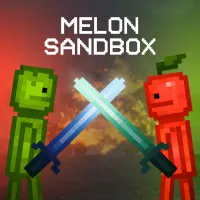
Every other game tells you what happens when the explosion goes off. Melon Sandbox lets you decide where the fuel is, where the target stands, and what triggers the sequence. The physics engine handles the rest with strict honesty - if the setup is good, the scene delivers. If it isn't, you adjust and try again. The satisfaction is entirely authorial.
You Design the Cause, Physics Handles the Effect
Most sandbox games give you scenarios to interact with. Melon Sandbox gives you variables. There are no pre-built demonstrations of what the game can do. You choose a map, populate it with objects from the item library, arrange everything with intent, and activate the scene. What follows is the physics system processing your configuration simultaneously - chain reactions, collisions, explosions, and environmental interactions all running from the initial state you created. Two players using identical items in different arrangements get completely different results.
How to Play Melon Sandbox
Start by selecting a map from the terrain options. Each environment offers different surface types, elevation, and built-in structural elements that interact with physics differently. Open the item library and browse the collections. Choose objects, drag them from the inventory to specific positions on the map, and build your configuration before activating. Once the scene starts, all physics processes simultaneously. Adjust placement, add or remove items, or reset completely to try a new approach.
Controls
Mouse Click - open item library and select objects
Drag and Drop - position items precisely anywhere on the map
Play Button - activate the scene and run all physics simultaneously
Reset - clear the current configuration and start fresh
What the Ten Item Collections Actually Contain
Melon Sandbox organizes its toolkit into categories that go beyond the obvious. Conventional collections cover weapons, explosives, and vehicles with their own weight physics. The library also includes ragdoll characters with individual reaction systems, fire and electrical chain models, disease spread mechanics that propagate differently from explosion blast radius, and environmental disaster elements. Combining items from different collection categories produces interactions that neither collection would generate alone. An electrical chain connecting to a vehicle surrounded by ragdolls creates a different scene than any single-category setup, and that cross-category experimentation space is where the game's depth lives.
Why a Game Without Goals Generates Them Anyway
Players who open Melon Sandbox expecting to feel directionless usually discover objectives within a few minutes. The first chain reaction that works becomes the standard. Achieving the same result in fewer placed items becomes the challenge. Recreating a specific scenario becomes the project. The physics system generates "what if" questions naturally - once you understand what the variables can do, the experiments suggest themselves. Sessions that start with no particular goal frequently end with players deep in a specific problem they set themselves, the game's absence of objectives replaced by the problems that emerge from understanding the system.
Keep the fun continue by trying -Melon Playground runs the same physics engine with its own item library and map options, andSmash Room delivers the destruction satisfaction with a more focused format.