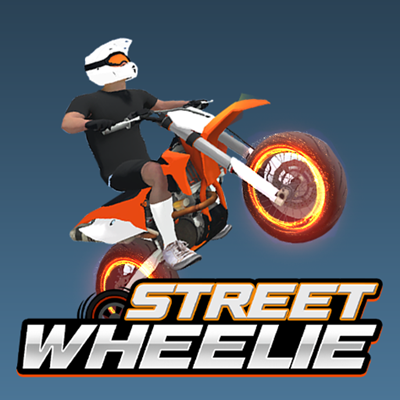
Street Wheelie is built around a paradox: the faster you go, the harder it is to stay balanced, but slowing down kills your score. Every run is a negotiation between momentum and control, and the game's physics engine makes that negotiation feel genuinely physical - like your hands are actually managing the tilt of a real bike rather than pressing keys.
The Sweet Spot Is Harder to Find Than It Looks
Every guide tells you to keep a slight backward tilt. What they don't explain is how narrow the margin actually is. Lean too far back and the front wheel flips up instantly. Lean too far forward and the wheelie drops. Street Wheelie places that safe zone in a range smaller than most players expect, which is why the first dozen runs usually end in under three seconds. The progression isn't about unlocking easier physics - it's about training your reaction time until that tiny angle range becomes instinctive rather than something you have to think about.
How to Play Street Wheelie
Your bike moves forward automatically. Your only job is managing tilt, angle, and steering to keep the front wheel elevated without losing control. The longer your wheelie runs, the higher your score multiplier climbs. Checkpoints appear throughout the city route and save your position - hitting one means a fall won't cost the entire run, which makes practicing specific sections of road feel productive rather than punishing. Earned coins from each run unlock faster bikes, each with different weight and handling characteristics that require adjusting your muscle memory. The open-city road extends indefinitely, giving you unlimited runway to improve.
Controls
Up Arrow / W - tilt backward to lift the front wheel
Down Arrow / S - tilt forward or reduce lift
Left Arrow / A - steer left
Right Arrow / D - steer right
R - restart from the beginning
T - respawn at the last checkpoint
Why Different Bikes Feel Completely Different
Unlocking a new motorbike in Street Wheelie isn't just a cosmetic reward - it's a fresh learning curve. Heavier bikes need more initial tilt to lift but hold balance longer once stable. Lighter bikes respond faster to corrections but punish over-tilting more harshly. Faster bikes compress the reaction window, making every tilt adjustment more consequential. This means players who have mastered one bike's behavior need to genuinely relearn the physics for the next one, which is what keeps the game feeling challenging rather than repetitive as progression continues.
Building Runs, Not Just Attempting Them
Most players treat Street Wheelie as a reflexes test. The ones who post the longest runs treat it as a pacing game. Upgrading income multipliers early means more coins per run even when falls are frequent, which accelerates access to better bikes. Upgrading speed creates more distance per second of clean wheelie. Short practice runs on familiar road sections build muscle memory faster than grinding full runs from the start. The checkpoint system enables targeted practice - identify where your runs typically break down, respawn there, and repeat until that section stops being a problem.
No download needed, just ride -SoFlo Wheelie Life andWheelie Life keep the two-wheel balance challenge going with their own roads to master.