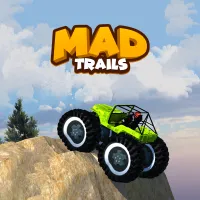
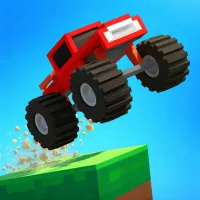
Mad Trails - The Mountain Doesn't Care How Fast You're Going
Speed is the wrong instinct in Mad Trails. The players who flip their truck on the third ridge, reverse off a ledge trying to recover, and run out of time before the summit - they all made the same mistake. They pushed the throttle when they should have been reading the terrain.
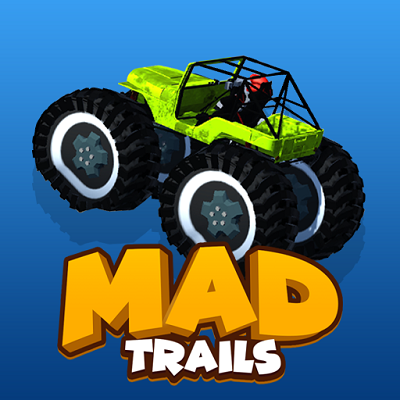
Mad Trails is a physics-based off-road climbing game where the challenge isn't reaching the top quickly - it's reaching the top at all. Steep inclines, loose rock surfaces, narrow ridges, and unstable balance points mean that every input matters. Too much acceleration and you roll backward. Too little and you stall halfway up a face with no momentum to recover. The gap between a clean climb and a failed one is often a single throttle tap held half a second too long.
Why the Physics Change Everything
Most driving games abstract away the mechanical details. Mad Trails doesn't. Deforming tires respond differently to rock surfaces than to dirt. Soft-wheel physics mean the truck compresses and shifts weight as terrain changes beneath it. The throttle is sensitive enough that feathering it - applying small bursts rather than holding it down - produces dramatically different results on steep sections than a steady press would.
This isn't simulation-level complexity, but it's enough that experience with the physics model genuinely transfers between runs. A player who has learned how their current vehicle behaves on loose rock will navigate the same surface faster on the third attempt than they did on the first, not because the terrain changed, but because their throttle inputs did.
Reading the Terrain Before You Climb It
Each course in Mad Trails is built around a specific set of obstacles - steep inclines, narrow ridges, loose rock clusters, unstable peaks. Experienced players spend a moment at the bottom identifying the structure of the climb before committing to an approach. Where is the balance point near the top? Is there a ledge that requires a speed reduction before it, or an open face that rewards building momentum early?
This kind of pre-climb read is what separates players who retry stages five times from players who clear them in two. The terrain doesn't change between attempts, so the information from a failed run is always useful.
Progression and Upgrades
Each successful climb rewards resources that feed into vehicle upgrades and new crawler unlocks. Different vehicles carry different torque, suspension response, and grip characteristics - which means the vehicle that felt ideal on earlier stages may not be the right choice for terrain with sharper angles or more unstable surfaces later.
Upgrade priorities matter. Traction and suspension improvements produce more noticeable results on technical rocky terrain than raw engine power does. A truck that grips better climbs more consistently than a truck that simply accelerates faster, because the limiting factor on most hard stages is control, not speed.
Ghost racing adds a competitive layer by introducing timed pressure from other players' runs. Watching a ghost line shows you approach angles and throttle timing you might not have considered, which makes it a useful learning tool even when you're not focused on beating the leaderboard time.
How to Play
Press W or Up Arrow to drive forward
Press S or Down Arrow to reverse
Press A or Left Arrow to steer left
Press D or Right Arrow to steer right
Use gentle throttle taps on steep sections rather than holding the accelerator down
Brake early when approaching narrow or unstable peaks to avoid overbalancing
Two Habits That Clean Up Most Failed Runs
Brake before the ridge, not after you're already on it. Most rollovers happen because players carry too much speed into a narrow balance point and can't correct before the truck tips. Slowing down twenty meters before the peak and approaching it with controlled momentum prevents the majority of these failures.
Invest in traction before power. The upgrade screen makes engine upgrades feel attractive because they produce visible numbers. Traction and suspension upgrades produce better results on the stages where most players actually struggle - the technical rocky sections where grip matters more than speed.
Conquer the terrain in Mad Trails - free at OhGames.io. The summit is there. The throttle control is up to you.
More like this:
Street Wheelie - single-input vehicle balance with a different kind of precision demand
Car Chaos - vehicle combat for players who want something faster and less methodical
Wheelie Party - motorbike balance game with similar micro-adjustment mechanics